Pearl Token: Attempt to Revive Classic Mining
Pearl token and the GPU mining nostalgia craze: how rented rigs printed money for a few weeks — and why the glitch died like Bitcoin's GPU era did.
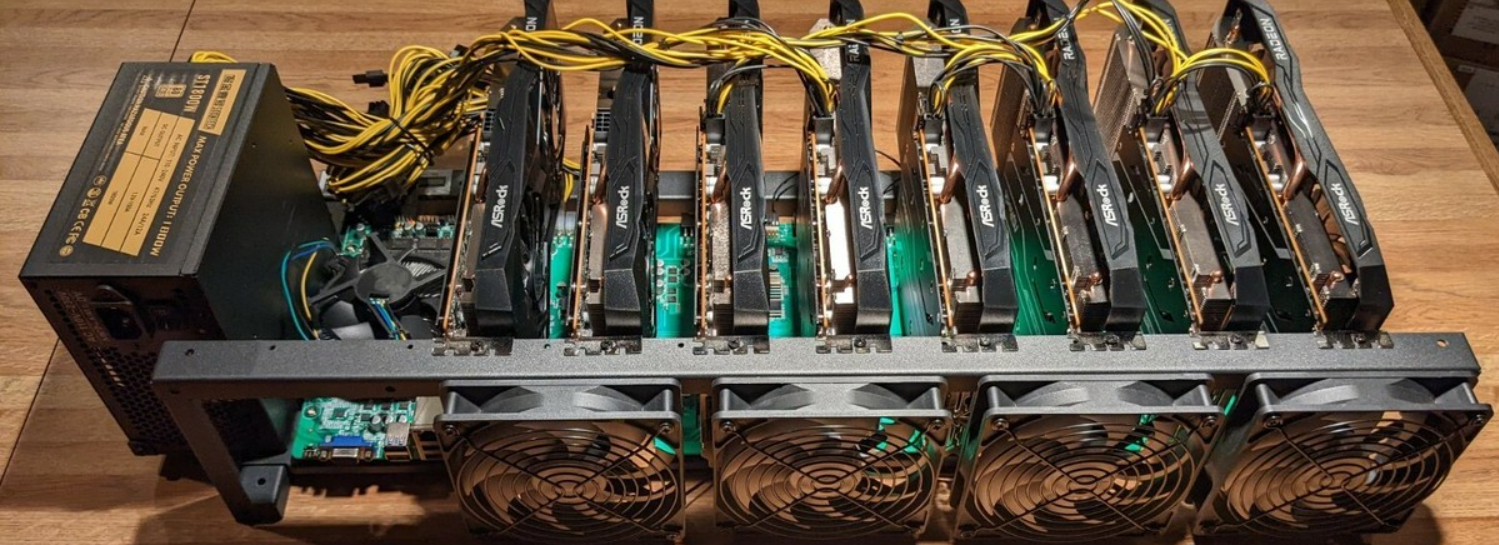
Everyone who has been involved in cryptocurrencies has somewhere in their memories a garage. There was a room, with the smell of warm dust, and a series of open computer cases linked together by zip ties, the fans whining at a pitch that the neighbours came to hate. For a few precious years, that noise actually represented money: if you left a graphics card running overnight it would quietly produce Bitcoin while you were asleep, and the only skill needed was the courage not to sell. That period came to an end in a well-recorded way — first the custom ASIC chips appeared, then the industrial farms, and the ordinary GPU was withdrawn from mining about as ceremonially as an old workhorse was taken out behind the barn.
That is the reason why the events of the previous year surprised so many people. A cryptocurrency called Pearl emerged, based on GPU mining, and for a rather short period of time the cycle actually worked: owners of gaming equipment once again began plugging in their rigs to mine the coin continuously, and — this was the aspect that made the whole situation go viral — people who had no gaming hardware of their own could rent GPUs for hourly rates on open markets and end up making a profit. The rental services which usually cater to AI startups found their utilization rates nearing ninety percent, almost all of it directed towards one particular blockchain. The idea of traditional mining, which had been dead for ten years, seemed to have been brought back thanks to nostalgia and good incentive design.
It obviously didn’t last, as no money glitch of that kind ever does. Yet the explanation of what Pearl was, together with reasons for its success and for the point at which it stopped working, is one of the simplest lessons in crypto economics that can be obtained completely for free.
Man Who Never Sold the Garage
The person in question is Greg. He is not a whale and is not an insider; rather, he is a systems administrator in his forties and, from 2011 to 2013, used graphics cards to mine Bitcoin, sold part of his holdings to buy a car, keeps as a sentimental memento the outdated GPUs that he had used, and has never completely forgiven himself for the bitcoins he got rid of at prices which now seem to have been typos. Greg is exactly the type of psychological profile that Pearl was meant for, and he is aware of this, but it doesn't bother him. His tone changes when he speaks about that time in his garage; it is not the money that matters to him, but rather the feeling of a machine producing money and the hum of having been one of the first.

The collection of graphics cards that Greg currently has is small but real; it includes a number of used RTX 3090s which he bought secondhand at the end of the last crypto winter, one rather nice RTX 5090 that he treats rather like a pet, and a few smaller graphics cards that are sitting on the shelves his wife has successfully reduced on two separate occasions. For many years the only purpose of this equipment has been to rent it out. Sites such as Vast.ai enable private individuals to list their GPU capacity at an hourly rate, and in the past two years the part of the market with the greatest demand has been made up of people who are training and running AI models. Consequently, on most days the computers are being used by strangers to carry out inference and fine-tuning for their language models. The income is steady, emotionally detached, and as far as possible kept separate from the idea of doing hands-on work in a garage. The cards are no longer used for mining; instead they are now being put to use for gig work.
When Pearl was introduced, Greg — just like a great many other people did — prepared a spreadsheet, something that is precisely the kind of thing every owner of idle silicon would like to do; he multiplied the token price by the expected daily emission and then divided the result by the network hashrate before going on to compare it with the rental income earned per card. The spreadsheet gave an extremely surprising answer. Mining Pearl continuously, twenty-four hours a day, was a better option than renting out the same cards to the AI companies — not just a little better, but by multiples. For the first time in ten years the honest answer to the question 'what should my GPUs do tonight' coincided with what it had been in 2012: mine.
It is essential to make clear precisely what Pearl actually was, given that the name has been spread and distorted in all directions because of the publicity. At its heart, the initiative had simply been an attempt to turn mining into a game — this meant issuing a token continuously to anyone who carried out real GPU work through the project's client, the supply schedule and the related narrative being modified in order to reward those who had taken part early and in an obvious manner. It was not a second Bitcoin, not a solution to any real problem, and not a productive asset in the normal sense. Its value was entirely based on attention — on the collective agreement of a group that mining should be enjoyable, that GPUs should count, and maybe, just maybe, the old days could be brought back by adding a ticker to the arrangement. Greg completely realised this; he will say so himself, typically just before checking his balance.

There is a distinction which the hype on purpose obscured, and this is important for anyone who wishes to draw any lessons from the episode. In 2012 Bitcoin was mining a token which aimed to be money and, surprisingly, actually did become money — there was a possibility that the electricity could be turned into something lasting. Pearl, on the other hand, mined a token which aimed simply to provide a reason for turning on your GPU. The work achieved nothing with regard to the outside world, secured nothing apart from its own scorekeeping, and created value only to the extent that new attention continued to arrive in order to buy the emissions. This does not mean it was a scam; it means it was a game with a real prize pool, lying somewhere between a lottery and a ride at an amusement park. But the difference determined everything about how the story concluded, since games with prize pools come to an end when the audience goes home, while money — if it ever ends — does so for other, slower reasons. Greg mined both of them, ten years apart, and will tell you that the feeling when typing at the keyboard was the same. The feeling in the wallet afterwards, however, was not.
When Renting Became Mining
What was truly new about the story wasn't the mining but rather who was allowed to take part. Ten years ago, taking part in mining required owning hardware; the entry requirement was a credit card bill. Pearl's phenomenon flowed through a completely different channel. Marketplaces such as Vast.ai and Clore.ai exist exactly so that anyone can rent raw GPU time from other people — usually in order to fine-tune a model or render a scene. People realised that the same rented GPUs could run the Pearl client just as easily as they can run PyTorch; a renter could set up dozens of machines at market rates, direct them all to the token, and keep the difference between the earnings from the emissions and the cost of the rental.
For several weeks the difference was enormous. The rental platforms — marketplaces which have their own sensitive supply-and-demand balance — experienced a surge in demand as mining farms consisting of other people's GPUs suddenly appeared. On some types of card the level of utilization rose towards ninety per cent; prices on the rental side increased; and the arbitrage opportunity narrowed from both sides, as is always the case. Nevertheless, during that period the economic situation was so absurd as to lead to the term being widely circulated among every Telegram channel: an infinite money glitch. All you had to do was rent other people's computers, feed them with a token that pays more than the cost of the computers, and then repeat the process. No capital was required, no hardware was needed, and the only expertise needed was a basic understanding of Docker.
The window's human quality is something worth enjoying since the mining activity had been outsourced. People who had never actually taken part in mining enjoyed the odd pleasure of seeing machines that they had rented operate across three continents and earn a token bearing their name. Greg at least had the advantage of history on his side and so he extended the running time of his rig, making his 5090 carry out its most profitable night shift ever. For a moment the GPU rental markets — businesses involving dry infrastructure, in effect utilities — became like casinos in which the house advantage temporarily favoured the players. It is not a sustainable state for infrastructure to turn into a lottery ticket, but as a memory it is impossible to beat, and all those involved knew that they were spending a limited amount of time.

The rental websites themselves remained in a state of reserved shock during that period. Their business model is based on equilibrium — there having to be sufficient supply to meet AI demand, enough demand to encourage owners to list their machines, and prices that move within ranges which everyone can plan around. When Pearl introduced a demand shock with no loyalty — that is, a tenant who would rent every available card of the right kind at any price until the arbitrage opportunity disappeared and then suddenly vanish without leaving a forwarding address — owners were delighted; utilization had never been this high outside of the major AI product launches. The platforms, however, were likely more unsure about it. A market that rises rapidly and then crashes teaches its participants to lose faith in the price chart. And the incident left a lasting impression on both sides: tenants found that mining demand could crowd out their computing power, owners realised that their uptime dashboards could resemble those of slot machines, and all learned that structurally a GPU rental market is just one price discovery mechanism away from becoming a mining pool that hasn't yet realised it.
Faucet and the Firehose
Why did the Pearl team take those actions? The cynical answer — that they did it in order to enrich themselves — applies to any kind of project and so fails to provide us with any useful explanation. A more interesting explanation is that Pearl was primarily an attention-gathering device, and GPU mining is one of the most efficient such devices that has ever been created in the world of crypto. An airdrop is passive: you merely click and then receive the tokens before forgetting about them. Mining, by contrast, requires active participation — you have to install the software, keep it running, and monitor it — and it is this kind of involvement that leads to a sense of identity. Since thousands of people used the Pearl client, it meant that thousands had the software installed on their computers, regularly checked their balances, talked about the token, and defended it in the comment sections. You can't produce that kind of engagement simply by spending a marketing budget; the only way is to create it, and the mining rewards were that creation.
The approach taken by the team was a textbook case of incentive bootstrapping since it concentrated the emissions on the early participants in such a way that the results could not be denied, enabled the profitability to function as a form of advertising for itself, and then saw the narrative spread across the very groups — namely, GPU owners, rental traders, and mining nostalgia accounts — whose participation was what gave the figures any real meaning. Was the company making a profit from this? Very probably, even though the financial records are not accessible to anyone outside the group; a project that issues its own currency and then uses it to attract market attention is inherently profitable as soon as that currency is traded at a price above the cost of producing it, which is roughly zero. Whether the profit came from a reserve of tokens kept in a treasury, from any fees or sales within the ecosystem, or from the option value arising from having a committed group of supporters — the economic mechanism was drawn from the same source as all previous projects: early money turning attention into market capitalization.
The aspect that requires a certain degree of honesty is this: why aren't there any other companies currently engaged in the same activity? It's not the case that people haven't attempted it — copycat GPU-minable tokens keep showing up. What made Pearl's position special was the rarity of the phenomenon itself. The first project to direct global rental GPU capacity via a single token was able to capture the entire speculative boom; the second one, on the other hand, only secures a small portion of it, at the most disadvantageous prices, having to deal with more difficult questions. Attention on rental markets is a winner-take-most resource. Once the public has understood how the game works — once everyone realizes that when a mineable token is launched, the supply will increase and the opportunity window will close — no later token can provide the same simple arbitrage chance, because once something has been priced, its innocence is gone. Greg's machines are now once again situated between yields, and no subsequent project has emerged that makes the spreadsheet work. The owners are left with perfectly good hardware, looking for another Pearl and finding only discounts on rentals.
Retirement of the GPU, Again
The end of the window was just the usual way in which such endings occur: by means of arithmetic. As the number of miners grew, the amount of emissions per machine fell – the same total reward being split among an ever-increasing hashrate, each card's share therefore shrinking down to the cost of keeping it running. Then the token price, which had been supported by the same level of attention that had prompted people to take part in mining, developed its own gravitational effect. The two lines crossed at that point, the infinite money glitch turning into a finite money obligation and then into a money loss, after which the rental rigs – since they are ultimately run by people who are paid by the hour – disconnected within a few days. Utilisation on the rental platforms then fell back down to their previous AI-driven normal level. In his honest judgement, Greg moved his cards back to work on language models, a job which pays less per good week but pays that amount regularly and does not require one to believe in a ticker.

The analogy with Bitcoin's history goes beyond being merely illustrative; it is structural. The use of GPUs for Bitcoin mining came to an end for one reason only: the reward received per unit of GPU work fell below the cost of carrying out that work, since specialized ASICs and large-scale industrial operations reduced everyone's share. The situation with Pearl was faster but followed the same pattern — a fixed amount of emission being followed by increasing participation, until economic factors got rid of exactly the type of participants the project was named for. The home miner is always the last one to remain in a mining economy, because he can tolerate losses that are disguised as a hobby, and at the same time the first to disappear, since he has no cost advantage whatsoever. Nostalgia might cause a token to be launched, but it cannot pay an electricity bill and it cannot outbid a datacentre — that original error of GPU mining has once again been fully reenacted.
There is, however, a more subtle lesson to be drawn, one that relates to what Greg truly picked up from the incident. The profitable period was not really about Pearl at all; it was instead about a temporary imbalance between two markets — the market for GPU time and the market for token emissions — and it was the people who were positioned to detect such imbalances and act on them within hours, rather than after weeks, who ended up reaping the most benefit. That ability, in contrast to nostalgia, is something that can be applied in different situations. The same insight that enabled someone to spot a mineable token outpricing AI rental will allow them to identify the next arbitrage opportunity wherever it arises: a mispriced datacenter contract, a card type with an unbalanced supply, or a payout rail that is cheaper than people generally assume. The basic fact about running small hardware economies is that survival depends on the fees — that is, on how much of your small income is lost when you cash out. Greg's modern approach is to convert his mining and rental income into USDT and then move it around on TRON, where paying the full burn rate on every transaction is no longer a necessity but a choice: instead of burning TRX, one can buy TRON Energy, and when using a good aggregator to obtain cheap TRON Energy, a day's worth of micro-transactions changes from being a loss to merely a rounding error.

Netts.io is an energy aggregator which gathers energy from a range of verified providers and sends it to your address just seconds after you've made the payment — without requiring you to stake or freeze your own crypto — and is there to ensure that the small, makeshift, garage-style economy that you're running maintains its profit margins: for an hour you can get either 65k or 131k Energy at a price that is roughly five times lower than the cost of burning TRX for the same transaction. Pearl came and went, just as pearls of attention do. The hardware remains, the habits remain, and the difference between those people who thrive in this economy and those who only take part in it has always been the same: noticing where the pennies are leaking and sealing the leak before the rest of the crowd does.