Netts at IX Crypto Summit 2026
Netts is going to IX Crypto Summit in Moscow, 28–29 October, MTS Live Hall - right before SiGMA World 2026.
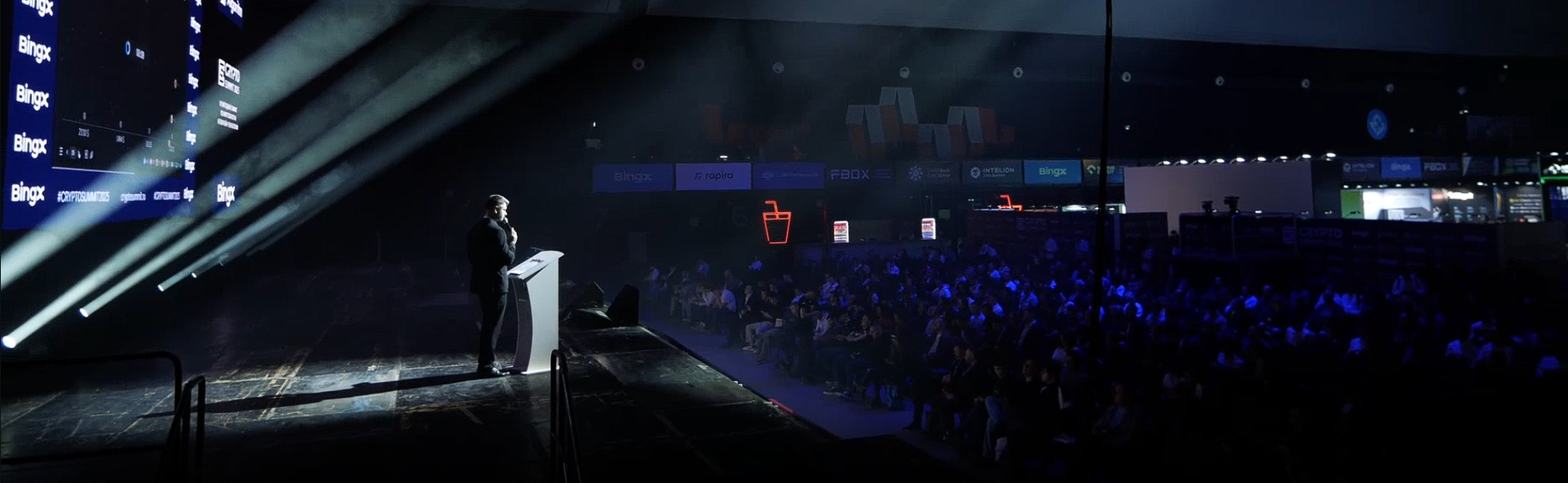
We have already announced our intention to attend the SiGMA World event – yet before that, Netts will also visit the IX Crypto Summit on the 28th and 29th of October at the MTS Live Hall on Entuziastov Highway for two days. It's more than just a carnival, it's a policy forum. If you are involved in payments, custody, mining infrastructure, operate a CFA platform, run a bank that has to take a look at digital assets, or are an exchange that deals with USDT across borders and would like to find out where your Energy is going, we would like to meet you there. Please don't hesitate to put forward the more difficult version of the question. The infrastructure that we build is designed to be able to survive it.
A Stop Before the Density
SiGMA World is all about density: there are thirty thousand people, four linked exhibitions, gaming operators standing alongside payment processors, affiliates, and the custodians who prevent the event from seeming like just a rumor. Rome is the result when industries which only come together through licensing documents are required to be in the same halls for four days. We want that corridor; we aren't beginning there.
The IX Crypto Summit isn't aiming to be Rome; it has been held in Russia every year since 2022. The ninth edition takes place over two days in a building which also hosts concerts, making it a sensible joke for someone who enjoys metaphors and a practical consideration if you're arranging a booth. The audience consists of investors, funds, miners, traders, exchanges, legislators, journalists, developers, lawyers, and the various projects that will have to operate under whatever the following statute turns out to be.

The result of that is the product. As Organiser Alexey Zyuzin has effectively stated, the Russian digital-asset market is going through a period of systemic change, the industry is about to operate under new rules, and this summit is one of the places where those rules are discussed before they are finalised. Proposals made during the meeting are said to be directed towards the State Duma and the appropriate agencies — namely those concerned with crypto-market regulation, cross-border settlement, mining, and infrastructure. It is not so much a question of whether all the proposals actually reach their destination as it is of the motivation behind them. People attend because they believe that the discussions taking place in this hall can still influence the official documents that will later tell them what they are allowed to do.
The incentive is clearly shown without the need for a brochure. The Bank of Russia is represented by individuals who actually manage the market-infrastructure and financial-technology departments. The Ministry of Finance sends its financial-policy chairperson. Among the attendees are deputies and a senator, alongside mining operators, the CFA platforms, Sber, Alfa-Bank, MTS Fintech, Masterchain, Atomize, compliance officers from major banks, and the CIS desks of the events which are already based on stablecoin traffic. RAKIB, the industrial mining association, and a thank-you note from the digital-development ministry are included in the supporting section. This isn't a corridor filled with tote bags. It's a corridor filled with people capable of delaying a product with just a sentence.
Why This Summit Exists
A conference that continually returns to the same country is wagering that the local market still requires a physical parliament. Crypto already has Telegram. However, in a jurisdiction which is altering the rules concerning mining and digital financial assets, it does not yet have a regular place where a banker, a deputy, a miner and an exchange desk can debate face to face. Crypto Summit provides that setting. There is an online ticket because of people in remote areas of Russia, CIS colleagues who are unable to fly, and the broadcast of the talks — but the organisers are clear about which of the two products is the real one. The broadcast is merely a kind gesture. The actual meeting space is what's for business.

For anyone who is involved with TRON, cross-border settlement is not a minor issue but a practical one. The Crypto Summit's programme includes the various methods of transferring value together with those used by correspondent banking, and also looks at digital financial asset infrastructure, real-world asset tokenization, industrial mining, and cybersecurity.
The various subjects are linked by the requirements of operation. A settlement route must function for the parties who use it. Tokenised assets require reliable issuance, custody, and records. Mining companies need well-defined rules concerning registration, reporting, and energy use. Exchanges and payment providers have to safeguard wallets, customer accounts, and transaction flows. A low fee is important, but it cannot compensate for a transfer route that fails a compliance review.
Russia’s Market in Transition
The new law concerning the circulation of cryptocurrencies in Russia came into force on 1 September 2026. It permits investors to trade via regulated intermediaries. Non-qualified investors may purchase the most liquid cryptocurrencies up to 300,000 rubles annually through a single intermediary, on the condition that they have passed a test. Qualified investors, too, may trade any cryptocurrencies without any amount limit, provided that they have also passed the test.
The law also allows exporters and importers to use cryptocurrency for cross-border payments, either through intermediaries or directly, though domestic cryptocurrency payments are still banned. Market participants have until 1 January 2027 to apply for licences and put their operations in compliance. As for businesses, the immediate task at present is to translate those rules into customer checks, settlement procedures, reporting and infrastructure.
Mining has a set of official rules; in 2024 Russia introduced regulations concerning digital-currency mining, and the Federal Tax Service keeps registers of both miners and operators of mining infrastructure, together with the obligation to submit reports on the currency that has been mined. The fact that the summit is concentrating on mining, settlement, and digital assets shows that the industry is moving from general policy issues to specific operational requirements.

The organizers state that the initiatives coming from the summit are communicated to the appropriate agencies and then presented to the State Duma. This does not imply that all the proposals will become law; rather, it does provide businesses, technical experts, and policymakers with an opportunity to examine how the rules function in practice. Marat Amanliev, who is the managing partner at Right Side, considers the summit to be one of the rare events in Russia where substantial dialogue can take place between business, experts, and the government. The benefit lies in allowing these different groups to compare the requirements and the way they are implemented before costly gaps arise.
Two Days, Several Ways to Attend
The Crypto Summit will be held at the MTS Live Hall in Moscow from October 28 to 29. Among the speakers listed are people coming from the Bank of Russia, the Ministry of Finance, the State Duma, the Moscow Exchange, banks, mining companies, and crypto firms. The audience will consist of investors, funds, miners, traders, exchanges, legislators, journalists, developers, lawyers and projects.
The event provides online, standard, premium, and VIP tickets. The online ticket gives access to streams of the speaker presentations, panel discussions, and the main business programme. Standard admission covers both days of the conference and the exhibition. Premium tickets include coffee breaks, the speaker recordings, and access to the afterparty; VIP tickets also include lunches and a VIP area. The prices listed are:
The standard amount is 11,000 rubles, increasing to 12,300.
Premium: 23,000 rubles, increasing to 25,100.
VIP: 45,000 rubles, increasing to 49,300.
The afterparty will take place on October 29 at 21:00 at VK Gipsy and entrance will be granted with premium and VIP tickets, the VIP tickets giving access to the VIP area. Applications for the summit are also accepted from exhibitors, influencers, and media representatives.
Russian businesses have to get to know the rules that apply now in their country. They also need to establish working links with the wider crypto ecosystem: this includes using compatible wallets and custody systems, having reliable settlement partners, adopting shared security practices, and making use of protocols that work across different services. Such connections are useful no matter what the political alignment is. Although the organisations concerned must still comply with the relevant law, developers and operators gain from sharing practical knowledge across borders.

Cryptocurrency is not merely an issue for politicians or something that belongs to the policy of one country; its networks, software, and users are present in various jurisdictions. While a change in the law can influence the way a business takes part, it cannot deal with all the technical questions or define the complete purpose of the technology. The summit provides an opportunity for participants in the Russian market to talk about local requirements yet still stay connected with the rest of the industry.
What Netts Will Discuss
Netts will hold meetings with exchanges, custodians, and payment companies in order to talk about the rental and management of TRON Energy. When an institution is delegating its TRX stake, the main issue is not just how much Energy it will be able to generate, but rather which addresses will receive that Energy and how the requests for it are screened.

Netts indexes in its ClickHouse analytics system transactions, addresses, operation types, and risk information. The compliance perimeter that it has published covers more than 28 million TRON addresses, including those that are sanctioned, those on the Tether blacklist, addresses linked to phishing and scam operations, addresses connected with hacks and the theft of funds, and internal abuse blocks. Energy and Bandwidth requests are verified against a common deny-list; if no screening result is available at the time, the request is not regarded as clean. Elliptic also carries out an additional AML/KYT check on large, suspicious, and randomly selected requests.
The controls guard the infrastructure belonging to Netts and the partner resources that go through it; they don't take the place of an exchange's own AML/KYT programme. People who attend the Crypto Summit can talk about the role of screening in a delegation workflow, examine how the system deals with missing data, and find out what evidence is available for use in a compliance review. It is this kind of in-depth discussion that enables a new regulatory framework to be turned into actual infrastructure.

Industrial hashing amounts to both a power bill and a legal status. TRON Energy is a different kind of setup, but the underlying instinct is similar to that one: lock in capital, obtain a resource, and then stop paying the silly retail rate. A miner who already understands the freeze-and-wait strategy already knows why a payments desk would prefer to rent for an hour rather than spend a stack of TRX on each USDT transaction. The summit brings those kinds of people together at the same exhibition. If we can't explain the difference between an ASIC hall and a delegation in that room, then we shouldn't be on the floor in November as well.
What We Are Bringing to Moscow
Netts operates a TRON Energy rental and management service, allowing companies to transfer USDT at a cost which is only a small part of what they would have to pay if they were to burn TRX. In Moscow we hope to have the same kind of discussion that we will have in Rome, but with a different audience in mind: top exchanges, custodians, payment firms, and banks and CFA firms which, whether or not they use the term crypto, are now coming into contact with stablecoin volumes. The compliance feature that we have incorporated into resource delegation is the reason one should halt at that point. Among TRON rental and management services, Netts is the only one providing that type of integrated layer.
When an exchange or a similar kind of venue gives us some of its own TRX shares to look after, yield is the simple answer. The difficult question, though, is the one a compliance officer will put to you in either city, and will put it more pointedly here since the scheme involves a large number of people whose job it is to ask such questions — so, actually, to whom are our resources being entrusted? The energy used to power a peel chain isn't a neutral kilowatt; it can mean that the venue's own shares are being used to have someone else clean a drain. No one in a building that also hosts the tax service, the Interior Ministry's remote-theft unit, and a bank compliance director would want to have to explain that during an audit.
The check is located within the pipe, not in PDF form. The entire TRON chain is indexed in our analytics system using ClickHouse — including transactions, addresses, operation types, risk labels and AML results — with this data being kept up to date and supplied to a decision engine which operates between each request and each delegation. The AML results are stored so that a human agent can later reopen them. Based on this we maintain a block list covering more than twenty-eight million TRON addresses: those that are sanctioned, entries from the Tether blacklist, addresses associated with phishing and scams, addresses linked to hacks and stolen funds, and our own abuse blocks. The official sources of sanctions are the United States, the United Kingdom, the European Union and Israel. Each Energy or Bandwidth request is screened before any delegation takes place. One deny-list is used by both the compliance layer and the Energy and Bandwidth handlers, so an address that has been blocked cannot look for another gateway within the same service. If a fresh check is missing, the fact that it is missing is not taken as evidence that the address is safe. Public refusals can occur at the Kong/Nginx edge in a period of about five to ten milliseconds, prior to the request becoming a product event. In addition to our own monitoring, Elliptic acts as an independent AML and KYT provider, focusing on the large, the unusual and the random samples.

This layer safeguards our infrastructure as well as the partner resources that go through it. For a custodian, it functions as an additional check so that the Energy that has been delegated is less likely to end up at an address which is already known to be sanctioned, abusive, or associated with theft. And for a CFA or settlement firm which is only now getting involved with TRON since the client already uses USDT, it makes the difference between renting a commodity and renting one that has already declined to be included on a map of known bad addresses.
That is the product; the summit takes place in the room where the product has to be presented to people who won't be impressed by a sun price on its own. Rome will still receive the same product, Moscow will get it first.
People who treat the two days as more than a livestream usually leave with a short list, and it is almost the same list we described for SiGMA, only the nouns have changed:
1. Trust — this is still an asset that the industry cannot display on a screen, and when you are in a policy room you won't be surprised by the next circular.
2. Intelligence that doesn't reside in a post — how a deputy is in fact picking up on mining, how a bank is in fact picking up on stablecoins, and which CIS desks are quietly turning into the conduit.
3. Introductions that no one had planned — such as a CFA platform which needs cheaper USDT sends, a miner who has TRX lying around unused, and an exchange that at last wants to find out who receives the Energy.
FOMO still affects the cheaper seats, while the more expensive ones are occupied by people who already know the discussions will be uneven and have come in order to see the clashes. Not all conversations result in a contract. In Moscow a brief negative reply can save a quarter of the cost of building the wrong kind of integration, and a short yes in Rome can later turn into a longer yes the following week when the same people — or their equivalents — are in a more crowded, international hallway and the question then is no longer whether the rule exists but whether the pipe can carry the volume.

Here is the itinerary. SiGMA World will continue to be the venue where gaming, affiliates, FX, and digital assets are all based in the same city. TOKEN2049, ETHDenver, Consensus, the Bitcoin Conference, Dubai and Abu Dhabi will still carry out their own respective activities on the global calendar. The IX Crypto Summit carries out a function that none of the other events can: it brings together the CIS regulatory discussion, the mining floor, the CFA stack, and the banks in one hall in Moscow for forty-eight hours before sending everybody home to deal with what they've said. The online stream extends the geographical reach for those who won't fly. It does not take the place of the two days. A stream cannot introduce you to the event. A stream cannot observe how a compliance director's face changes when you say that energy is delegated, not sold, as a black box.
If you're in Moscow on the 28th and 29th of October, please go and see Netts at the IX Crypto Summit in the MTS Live Hall. Take with you the people responsible for compliance, the infrastructure team, and the individual who has to give a briefing on Energy to a committee. We'll go over the screening and look at the delegation face to face. And if you're flying to Rome from the 2nd to the 5th of November, carry on the same discussion at Netts' stand at Fiera Roma. Alternatively, if you can't make either of those visits, you're still welcome to come later. Do do so and say hello — first in this room and then in the one next to it.